

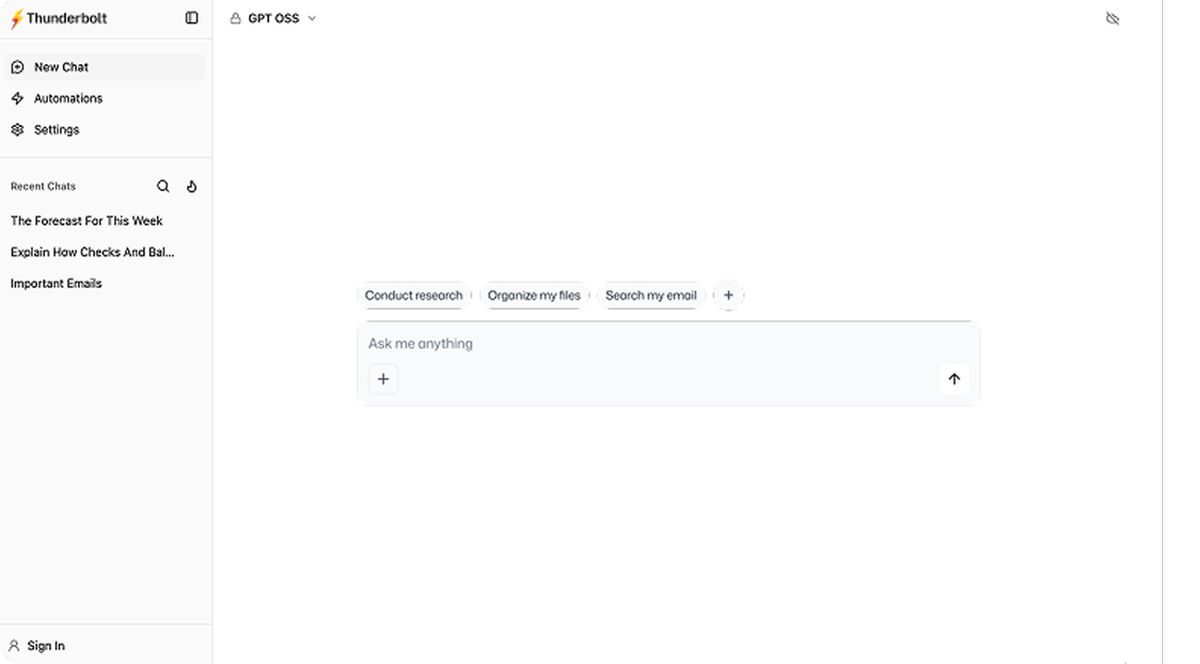
Mozilla has unveiled Thunderbolt, a new product aimed at the enterprise AI market that allows users to run self-hosted AI infrastructure without relying on third-party cloud services.
Thunderbolt serves as a front-end client rather than a standalone AI model or agent browser, enabling businesses to operate their own AI services securely. This move aligns with current trends in enterprise technology, where data privacy and control are growing concerns.
Built on the Haystack open-source AI framework, Thunderbolt facilitates the creation of custom AI pipelines by integrating with any ACP-compatible agent or OpenAI-compatible API, including brands like Claude, Codex, OpenClaw, DeepSeek, and OpenCode. This versatility allows users to leverage various AI capabilities tailored to their specific needs.
Stay Ahead of the Curve!
Don’t miss out on the latest insights, trends, and analysis in the world of data, technology, and startups. Subscribe to our newsletter and get exclusive content delivered straight to your inbox.
Subscribe Now
The system can connect with locally stored enterprise data using open protocols and utilizes an offline SQLite database to maintain a local “source of truth” for its AI model. This feature is particularly significant for enterprises aiming to maintain complete control over their entire AI service stack, mitigating concerns related to data security.
According to Mozilla, Thunderbolt includes “optional end-to-end encryption and device-level access controls” to enhance security for users managing sensitive data. This aspect adds a layer of trust for businesses considering the deployment of AI technologies in their operations.
Thunderbolt represents Mozilla’s strategic effort to penetrate the growing enterprise AI sector, responding to an increasing demand for solutions prioritizing data sovereignty and security.
Featured image credit
