

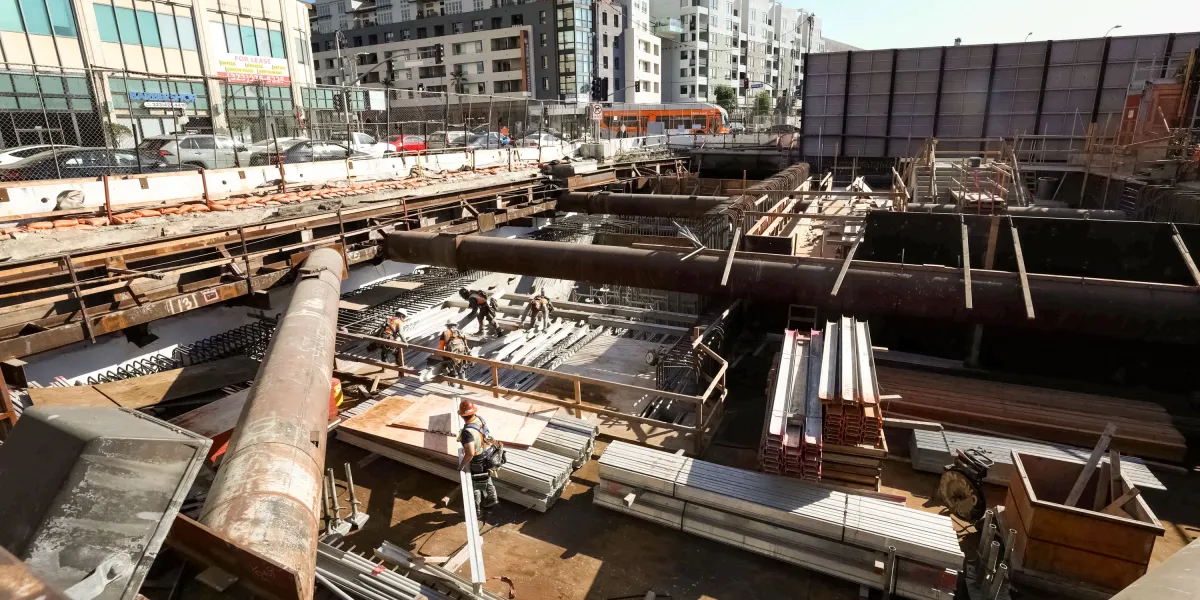
These days, dirt full of flammable goo is no longer a problem. “The technology finally caught up with the concerns,” says LA Metro’s James Cohen, a longtime manager of the engineering for this stretch of subway. The key was an earth-pressure-balance tunnel-boring machine, an automated digger that is designed to chew through ground packed with explosive gas. It sends removed dirt topside via conveyor belts and slides precast concrete liner segments into the tunnel, which are joined together with gaskets to create a gas- and waterproof tube. All that let the machine dig about 50 feet every day.
A Metro train pulls into La Cienega station Art by Susan Silton at the Fairfax station Art by Eamon Ore-Giron at the La Brea station
Meanwhile, engineers excavated the stations from the street level down. They worked mostly on weekends, digging out a space and then decking it with concrete so that work could go on underneath while LA drivers continued to exercise their God-given right to get around by car above.
Did the project finish on time? No. Did it come in under budget? Also no; this segment alone cost nearly $4 billion. Is the city now racing to build housing and walkable areas to take full advantage of the extension? Oh, please. Yet the new stations still manage to feel, in the end, transformative—as if Los Angeles’s train has finally come in.
