

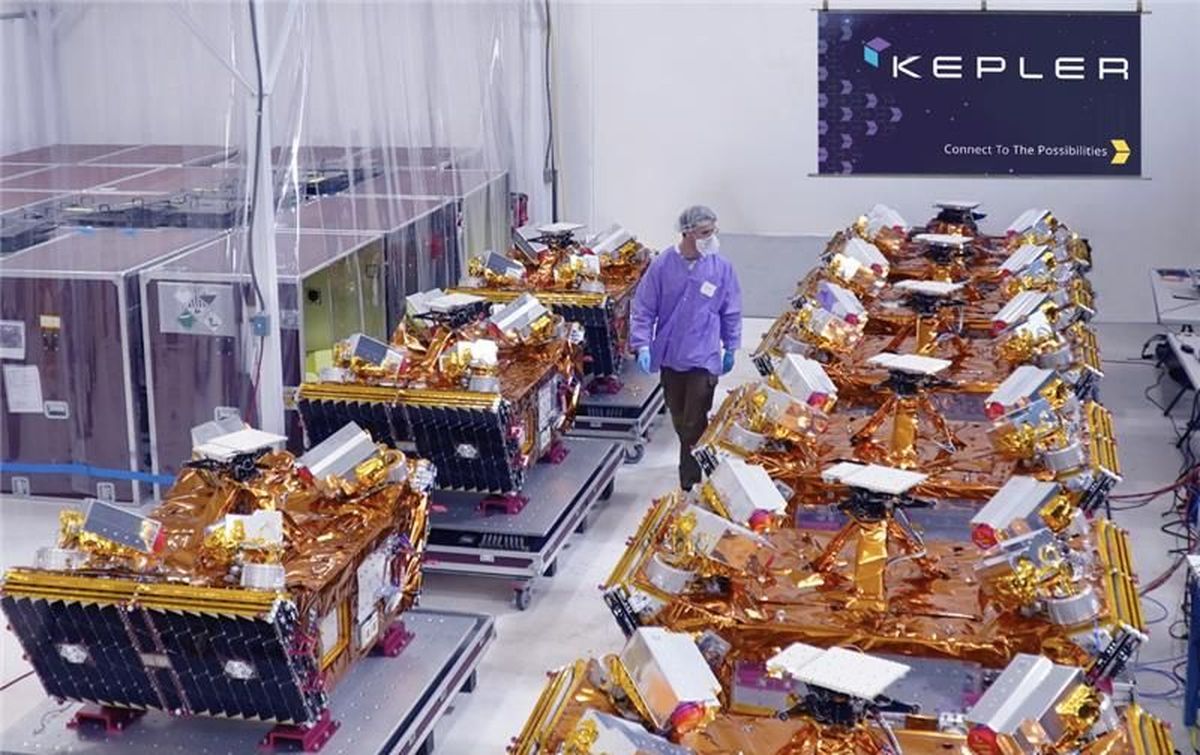
Kepler Communications launched the largest compute cluster in orbit in January, consisting of approximately 40 Nvidia Orin edge processors across 10 operational satellites interconnected through laser communications links.
The company now serves 18 customers and announced a new partnership with Sophia Space, a startup testing software for its orbital computer on Kepler’s satellite constellation. This collaboration signifies a key step toward advancing orbital computing capabilities.
Experts predict large-scale space data centers will not materialize until the 2030s. Initial developments will focus on processing data in orbit to enhance the functionality of space-based sensors utilized by both private enterprises and government agencies.
Stay Ahead of the Curve!
Don’t miss out on the latest insights, trends, and analysis in the world of data, technology, and startups. Subscribe to our newsletter and get exclusive content delivered straight to your inbox.
Subscribe Now
Kepler Communications views its role as an infrastructure provider for space applications, rather than a traditional data center operator, CEO Mina Mitry stated. The company aims to offer network services for satellites and aerial vehicles.
Sophia Space is focused on developing passively-cooled space computers, addressing overheating challenges in orbit without the need for heavy active-cooling systems. In their partnership, Sophia will upload its proprietary operating system to one of Kepler’s satellites and configure it across six GPUs on two spacecraft—the first such operation in orbit.
This software verification is vital for Sophia prior to its first satellite launch planned for late 2027. Kepler’s partnership aims to demonstrate the practical utility of its network and advance its data processing capabilities.
Currently, Kepler processes data collected from the ground or through payloads on its satellites and plans to integrate third-party satellites in the future. The U.S. military represents a significant customer for these services, which include network processing from advanced sensors like synthetic aperture radar.
Kepler has previously demonstrated a space-to-air laser link for the U.S. government. Mitry emphasized the importance of edge processing to enhance responsiveness by processing data at the point of collection, rather than relying on distant processing hubs.
Mitry noted that the focus on distributed GPUs for inference is crucial, highlighting inefficiencies in relying on single powerful GPUs for training tasks in space. “If this thing consumes kilowatts of power and you’re only running at 10% of the time, then that’s not super helpful,” Mitry said.
Sophia CEO Rob DeMillo commented on the recent ban on data center construction in Wisconsin, suggesting that regulatory challenges for terrestrial data centers could boost interest in space-based computing solutions. “There’s no more data centers in this country,” DeMillo remarked, indicating a shift in the data center landscape.
Kepler and Sophia’s collaboration epitomizes the evolving nature of orbital computing. As they integrate their technologies, further developments could redefine data processing in space, leading to significant industry shifts.
Featured image credit
